Cold Wallet vs Hot Wallet: Which Should a Beginner Use?

Once you really start looking into wallets, you'll soon bump into the pair "cold wallet" and "hot wallet." Some in the community say a beginner must get a hardware cold wallet to be safe; others say there's no need and it's too much fuss. Who do you listen to? This piece first explains the difference between the two in plain terms, then gives you a practical conclusion suited to the beginner stage, so you don't waste money or get yourself in a tangle.
01Cold vs hot, the difference is whether it's online
Don't let the names spook you. The difference between a cold wallet and a hot wallet comes down to one core thing: whether the environment safeguarding the private key is online.
- Hot wallet = the environment the private key sits in is online. The most typical is the wallet app on your phone, usable anytime, always connected.
- Cold wallet = the private key is stored offline, away from the internet. The most common form is a hardware wallet (a small USB-stick-like device), and signing also keeps the network isolated as much as possible.
Why is this point so critical? Because once a private key touches the network, in theory it gains another path for hackers to target. A cold wallet shuts the private key outside the network, like adding a layer of physical isolation. A hot wallet trades a bit of security for everyday convenience, a cold wallet trades a bit of convenience for higher security, it's fundamentally a trade-off.
Whether cold or hot, both belong to "self-custody", the key is in your own hands, unlike the custodial model of an exchange. For how to weigh the two models, see what's the difference between a wallet and an exchange.
A memory aid: hot = online, grab-and-use; cold = offline, tucked away. A hot wallet is like the wallet you carry, handy for buying groceries; a cold wallet is like the safe at home, for large amounts you don't touch often.
02Hot wallet: convenient, but exposed online
A hot wallet is an online wallet, and the vast majority of phone wallet apps fall into this category.
Upside: easy to use. Receiving, sending, connecting to on-chain apps, all done in a few taps, suited to small funds you need to move frequently.
Cost: because it's online, it faces higher network risk, a phone infected with malware, a fake app with a backdoor installed, a phishing link clicked that authorizes a malicious contract, can all put a hot wallet's coins in jeopardy. So with a hot wallet, be especially careful about sources, download only from official channels, and watch out for fake apps and phishing pages, covered in how to spot fake exchange apps and phishing sites. For the conceptual distinction between cold and hot, Investopedia's hot wallet entry has a concise explanation too.
A hot wallet suits amounts at the "everyday pocket money" level; it's not advised to pile a large amount long-term into a hot wallet that's online every day. Don't put all your eggs in one basket, separating large and small amounts is a common practice among experienced users.
A bit more on where a hot wallet's real risk comes from. The unsafe part is rarely the wallet app itself being breached; it's more about "this phone of yours" and "your actions", a fake app with a backdoor installed, a phishing link clicked, an approval given to some malicious contract unknowingly. In other words, half of a hot wallet's security depends on how clean this device is and how careful you are about what you tap. So with a hot wallet, building the habit of downloading only from official channels, not clicking links carelessly, and not approving things offhand is more useful than agonizing over which brand of wallet to use.
03Cold wallet: secure, but more cumbersome
The most common cold wallet is a hardware wallet, a dedicated little device where the private key is generated and stored inside, never leaving; when transferring, you confirm the signature on the device, and the private key never touches an online computer or phone.
Upside: noticeably higher security. Even if your computer is infected, a hacker can't get the private key tucked inside the hardware device, suited to storing large assets you leave untouched long-term.
Cost: one, you have to pay for the device (insist on an official, genuine channel, second-hand or dubious-origin hardware wallets must never be used, they may have been tampered with); two, it's less grab-and-go than a hot wallet, every transfer means plugging in the device and pressing confirm, suited to "storing" rather than "moving often."
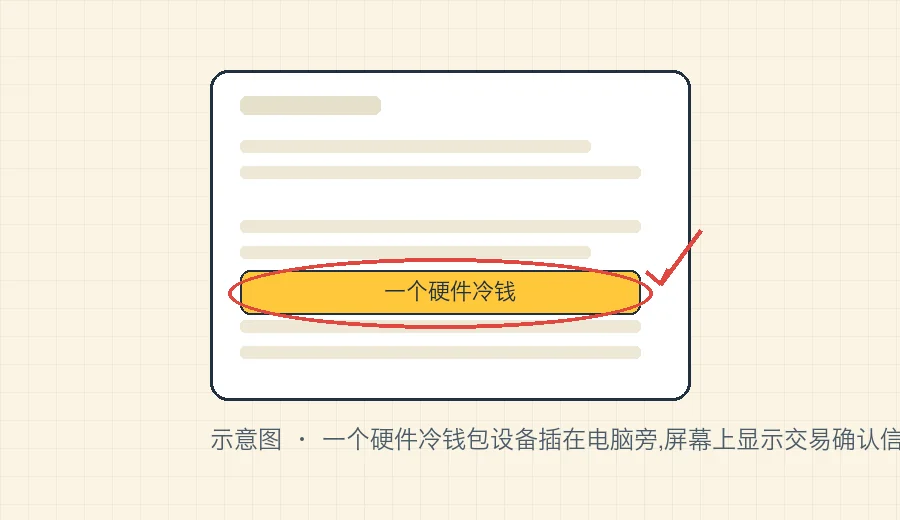
Buy a hardware wallet only as a brand-new genuine item from an official channel. Some sellers offer hardware wallets with a "pre-set seed phrase" or an "insider discount", these are almost always a trap, the device may have been pre-loaded with a seed phrase the attacker already knows, so the moment you transfer coins in, they're swept away. Once the device arrives, always re-initialize it yourself and generate a brand-new seed phrase of your own.
04Which should a beginner use: do it in stages
After all that, here's a no-detour conclusion, matched by stage:
- Just starting, small amount: maxing out the exchange account's security settings (2FA, anti-phishing code) and leaving coins on a reputable exchange for now is perfectly enough. What you should worry about at this stage isn't "whether to get a cold wallet," it's not getting phished and not installing a fake app. For security setup see the security setup to do after opening an account, and you can also check the account-security notes in the official Binance Help Center.
- Want to practice self-custody: use a hot wallet (a phone wallet app) with a small amount first, run through creating a wallet, writing down the seed phrase, and small transfers in and out, and get familiar before anything else. Don't move a large amount in from the start.
- Assets growing, long-term storage: now consider buying an official, genuine hardware cold wallet, put the larger amounts you don't touch into it, and keep everyday small amounts in a hot wallet or on the exchange. This is a fairly steady layered approach.
Whichever you end up using, cold or hot, one thing is the shared lifeline, safeguarding the seed phrase. Devices can be lost and replaced; lose or leak the seed phrase and no one can save you. Before fiddling with any wallet, thoroughly understand this first, I strongly recommend reading what are a seed phrase and a private key, and what happens if you lose them, and use the seed phrase safety self-check tool to score your own storage method. For general principles of wallet security, you can also refer to the Ethereum site's security guide.
FAQFAQ
What is the biggest difference between a cold wallet and a hot wallet?
The difference is whether the private key is connected to the internet. A hot wallet is online, like a wallet app on your phone, convenient to use but exposed to network risk; a cold wallet is offline, the private key never touches the internet, commonly a hardware wallet, more secure but more cumbersome. Simply put: a hot wallet is like the wallet you carry around, a cold wallet is like a safe.
Does a beginner need to buy a hardware cold wallet from the start?
Usually not. For a beginner just starting with a small amount, maxing out the exchange account's security or setting up a hot wallet to practice is generally enough. A hardware cold wallet suits people whose assets have grown and who need long-term storage. Fiddling with a hardware wallet for a small amount can actually cause you to lose coins through unfamiliarity with the operations.
If I lose a hardware wallet, are my coins gone?
If the hardware wallet itself is lost, as long as your seed phrase still exists you can restore the assets on a new device using the seed phrase, so losing the device doesn't mean losing the coins. What's truly fatal is leaking or losing the seed phrase. So whether cold or hot, the core is to safeguard the seed phrase.