How Much Should You Buy Your First Time?
"My first buy — how much do I actually put in?" I've been asked this so many times. Honestly, there's no single number that fits everyone — the same $150 is pocket change to one person and half a month's groceries to another. So the right question isn't "how much can make money," it's "how much could I lose without feeling it." This piece helps you think that amount through, and along the way covers how to size a position and rein in the mindset that's hardest to keep in check on a first buy.
01The core principle: use money you can afford to lose
If you only remember one line from this whole article, make it this: only invest a sum that, even if it all went to zero, wouldn't affect your normal life.
That sounds conservative, but it's the best insurance a beginner can give themselves. Crypto prices are highly volatile; big swings up and down are common over the short term, and a serious loss of principal is a real possibility. This "only invest what you can afford to lose" idea maps to a concept in investing called risk capital (risk capital) — the portion of funds you're willing to lose. If what you put in is rent you owe, your child's tuition, or next month's living expenses, then a drop means you bear not just a paper loss but real-world pressure — and under pressure, people almost inevitably make panicked decisions (selling at the bottom, borrowing more to win it back), which is precisely the path to losing the most.
Never borrow money to buy crypto, never take a cash advance on a credit card, never touch money you'll need urgently. In crypto, the "borrow to buy the dip and turn it around" stories almost all end badly. No way of buying is a sure win, and betting borrowed money on a highly volatile market is putting yourself over the fire.
02Why I tell you not to go all-in
Going all-in means putting every bit of your money in at once. Beginners are most prone to it under two emotions: one is seeing a big rally, fearing they'll miss out, and chasing the top in a rush; the other is hearing someone's "inside tip" and feeling this time is a sure thing.
The problem is, you've just arrived — you don't yet know how violent this market's swings are, and you haven't lived through what it looks like when it drops. Buying all at once means betting all your chips on "this price right now is a good price" — which you have no ability to judge. If it drops right after you buy, you have no reserves to average down, your nerves crack first, and you most likely sell at the bottom.
A steadier approach is buying in batches (i.e. dollar-cost averaging): split the money you plan to invest into several parts and buy a bit at intervals. When it's up you buy less, when it's down you buy more, and over time your cost gets averaged — and you don't have to agonize over "is now the best time." It doesn't guarantee better returns, but it really does lower timing pressure, which is especially friendly to beginners. To see the effect of different cadences directly, use the DCA calculator. This batch-buying method is called "dollar-cost averaging" in investing; to understand the principle, see Investopedia's explainer on Dollar-Cost Averaging.
03How to set a position size for yourself
"Position size" means how much money you put into crypto as a share of your investable assets. Beginners don't need to overcomplicate it; here's a plain way to think about it:
- First carve out your total spare money: set aside the portion that's genuinely idle, not needed short-term, and harmless if lost — that's your ceiling.
- For your first buy, use only a small part of it: don't put all your spare money in from the start. For the first time, a small fraction (enough to walk the whole flow and feel the volatility) is all you need.
- Don't bet heavily on a single coin: especially don't put the bulk on some small coin you "heard will moon."
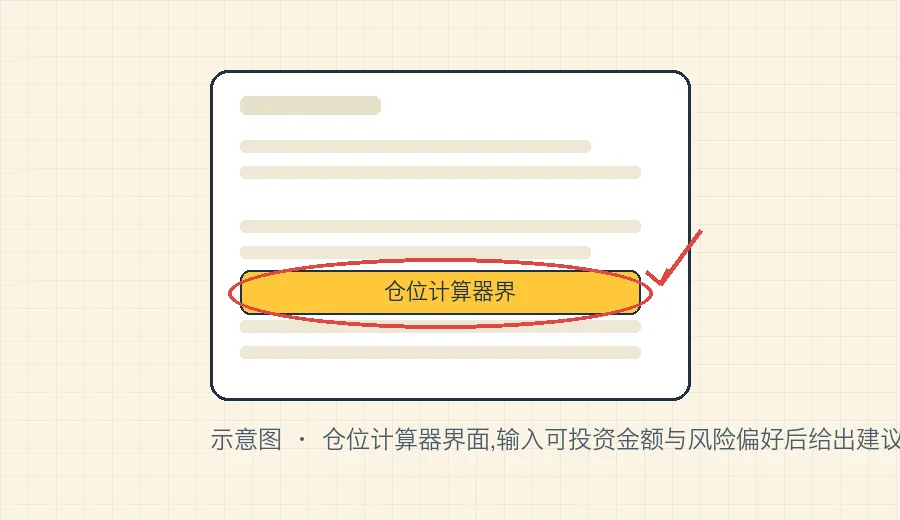
As for the exact split, everyone's income, debts and risk appetite differ — there's no standard answer. I made a position-size calculator; punch your situation in and it estimates a relatively sensible range — more reliable than going by gut. If you're not yet clear on how much volatility you can handle, take the risk tolerance quiz first, then decide how much to invest with a clearer picture.
04First time, mindset matters more than the amount
At bottom, the real point of a first crypto buy isn't how much you make — it's getting to know yourself. When the coin you bought drops 20%, do you calmly hold, or lie awake at night wanting to sell? When it's up 30%, do you stick to your plan, or get excited and want to pile in? These reactions — only by buying with real money, and living through the drops and rallies, do you find out.
So the best first amount is small enough that "a drop won't cloud your judgment." That way you can observe yourself and the market with a calm mind, treating this buy as tuition rather than a bet. Once you're sure you can hold and see clearly, talking about adding more isn't too late.
This piece is about thinking through how to control risk — not any promise that "buying this way will make money." No amount and no method can remove the inherent downside risk of crypto. Whether and how much to invest is for you to decide based on your own finances and risk tolerance; this site's content is not investment advice.
With the amount sorted, next comes "what to buy." For why beginners are advised to start with Bitcoin and Ethereum, see what coin to buy first; for the full buying flow, see the complete first-time buying guide. For general background on risk management, you can also read Investopedia's explainer on risk management.
FAQFrequently asked questions
Is a few hundred enough for a first buy?
Plenty. The point of the first time isn't to make money — it's to walk the flow, feel the volatility, and test your real mindset facing ups and downs. A few hundred lets you experience all of that, and losing it won't hurt. Once you're familiar with the rules and sure you can hold through swings, then think about adding more.
Can I borrow money or use living expenses to buy crypto?
Not advisable. Crypto is highly volatile and your principal can shrink sharply. Buying with borrowed money or money you'll urgently need means that if it drops, you bear both the loss and the pressure of repayment and expenses, pushing you into panicked decisions — exactly how beginners typically lose money. Only use spare money that, even if it all went to zero, wouldn't affect your life.
Should I buy all at once or in several batches?
For beginners, buying in several batches (dollar-cost averaging) is usually steadier on the nerves than going all-in at once. You buy through both ups and downs, which averages your cost and avoids the awkwardness of putting everything in at a peak. It doesn't guarantee better returns, but it markedly lowers timing pressure. You can use a DCA calculator to model different cadences.